Overview
As a first-time homebuyer, your credit score significantly impacts mortgage approval chances. Different loan programs have varying minimum requirements, but understanding the complete picture helps ensure you're truly loan-ready.
Minimum Credit Score Requirements by Loan Type
- Conventional Loans: 620 or higher
- FHA Loans: As low as 580 (or 500 with 10% down payment)
- VA Loans: Typically 620+
- USDA Loans: Generally 640 or higher
- Jumbo Loans: Usually 680-700+
Meeting minimum thresholds alone doesn't guarantee approval, as lenders evaluate credit as part of a broader financial assessment.
Why Credit Score Matters Beyond Minimums
Your score directly affects:
- Interest rates offered
- Down payment requirements
- Private Mortgage Insurance costs
- Loan program eligibility
- Total borrowing costs over the loan lifetime
The difference between a 620 and 740 score can mean tens of thousands in additional interest payments.
Credit Score Categories for Mortgage Lending
- Excellent (740+): Best available rates and terms
- Good (700-739): Strong approval odds with competitive rates
- Fair (660-699): May qualify with higher costs
- Poor (620-659): Limited options and higher rates
- Very Poor (below 620): May require FHA or score improvement first
Strategies for Improving Your Credit
Focus on these key areas:
- Pay all bills on time
- Keep credit card balances below 30% of limits
- Maintain older accounts
- Demonstrate diverse credit types
- Avoid new account openings before applying
Focused improvement efforts can raise scores by 50+ points within 3-6 months.
Beyond Credit: Complete Loan Readiness
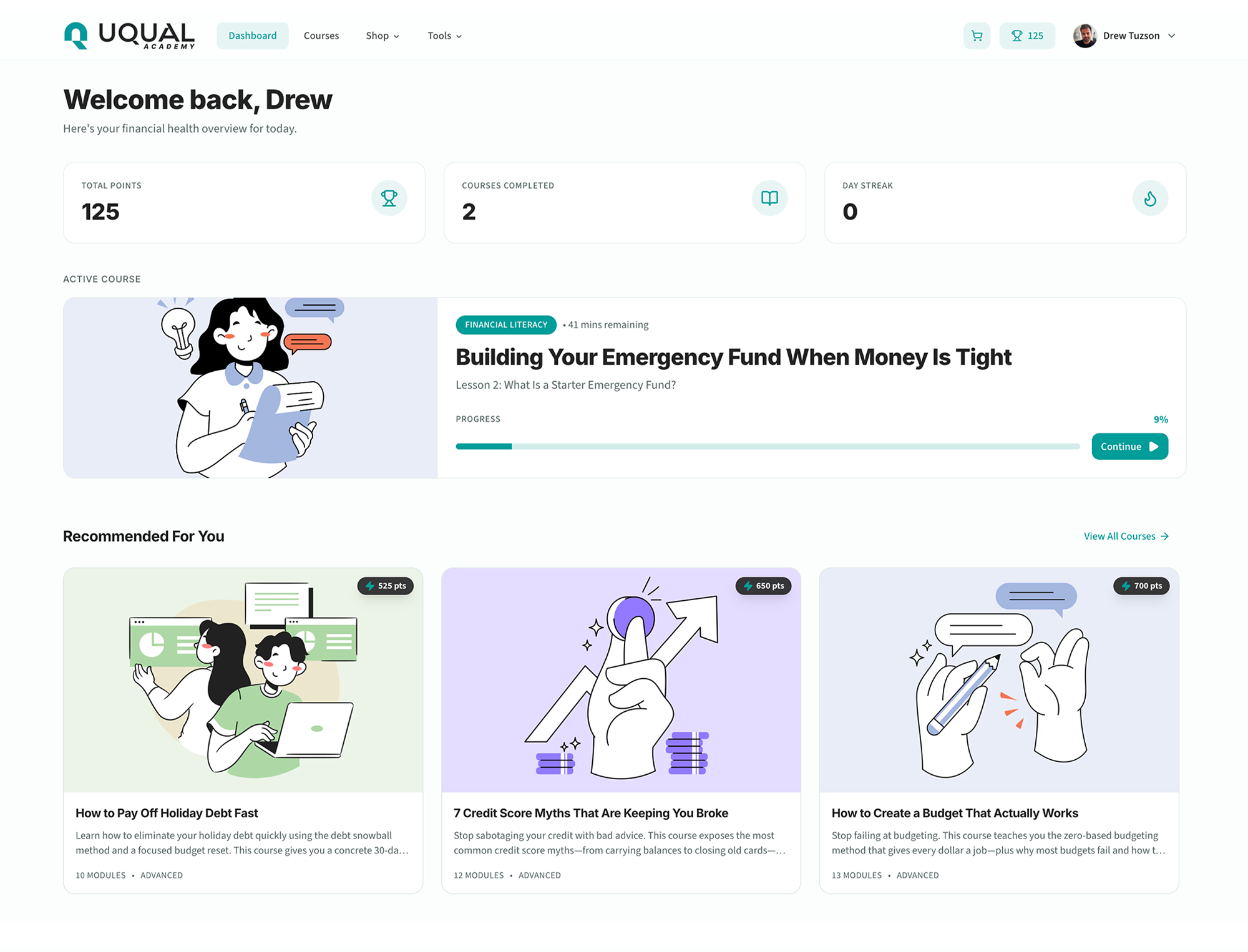
UQUAL's Loan Readiness Score evaluates:
- Credit Score (30%)
- Debt-to-Income Ratio (30%)
- Down Payment Savings (30%)
- Document Preparation (10%)
This holistic approach ensures genuine readiness for homeownership beyond minimum requirements.