Loan readiness and credit repair sound similar, but they are fundamentally different approaches to mortgage qualification. Credit repair focuses narrowly on disputing errors and negative items on your credit report to improve your score. Loan readiness is a comprehensive preparation process that addresses every factor mortgage lenders evaluate — credit health, debt-to-income ratio, down payment savings, and financial documentation — to get you fully qualified for a home loan.
This distinction matters more than most borrowers realize. Roughly 42% of mortgage denials involve factors that credit repair simply doesn't address — high debt-to-income ratios, insufficient savings, employment gaps, and documentation issues. Choosing the wrong approach can cost you months of effort and leave you no closer to homeownership.
What is Credit Repair?
Credit repair is the process of identifying and disputing inaccurate, outdated, or unverifiable information on your credit reports. A typical credit repair process includes:
- Credit report review — Pulling your reports from all three bureaus (Equifax, Experian, TransUnion) and identifying potentially disputable items
- Dispute filing — Sending formal dispute letters to bureaus and creditors challenging inaccurate information
- Follow-up and monitoring — Tracking dispute outcomes and filing additional disputes as needed
- Score monitoring — Watching for credit score changes as items are removed or updated
Credit repair is regulated under the Credit Repair Organizations Act (CROA), a federal law that imposes strict requirements on companies that offer these services. CROA prohibits upfront fees, requires written contracts, and gives consumers the right to cancel within three business days.
What Credit Repair Does Well
Credit repair can be effective when your primary barrier to mortgage approval is inaccurate information on your credit reports. Errors are more common than many people think — according to the Federal Trade Commission, about one in five consumers has a verified error on at least one credit report. If a reporting mistake is the reason your score falls below a lender's minimum, getting it corrected through the dispute process can make a real difference.
What Credit Repair Doesn't Address
Here's the critical limitation: credit repair only touches your credit report. It doesn't help with:
- High debt-to-income ratios — Even a perfect credit score won't qualify you if your monthly debt payments exceed lender limits
- Insufficient down payment — Most loan types require between 3% and 20% down, plus closing costs and cash reserves
- Employment or income documentation — Gaps in employment, recent job changes, or insufficient income verification
- Missing paperwork — Tax returns, bank statements, and other documentation lenders require during underwriting
Since mortgage underwriters evaluate all of these factors together, fixing just one piece of the puzzle often isn't enough to get you to approval.
What is Loan Readiness?
Loan readiness is a comprehensive approach to mortgage qualification that evaluates and improves your standing across the same four pillars that mortgage underwriters assess:
Pillar 1: Credit Health — Your full credit profile, not just your score. This includes payment history, credit utilization, account mix, length of credit history, and any derogatory marks. Loan readiness goes beyond disputing errors to build sustainable credit habits that keep your score strong over time — because understanding why credit scores alone don't determine loan readiness is the foundation of a smarter approach.
Pillar 2: Debt-to-Income Ratio (DTI) — Your total monthly debt payments divided by your gross monthly income. Lenders use this ratio to determine how much mortgage you can afford. Optimizing your DTI often involves strategic debt payoff, income documentation improvements, and understanding the specific requirements for your target loan type.
Pillar 3: Down Payment & Savings — The funds you'll need for a down payment, closing costs, prepaid items, and cash reserves. Loan readiness includes savings acceleration strategies and helps you identify down payment assistance programs you may qualify for.
Pillar 4: Financial Documentation — The paper trail that proves your financial picture to a lender: tax returns, W-2s, pay stubs, bank statements, and employment verification. Loan readiness ensures your documentation is organized and meets lender requirements before you apply — not after you've already been asked for it.
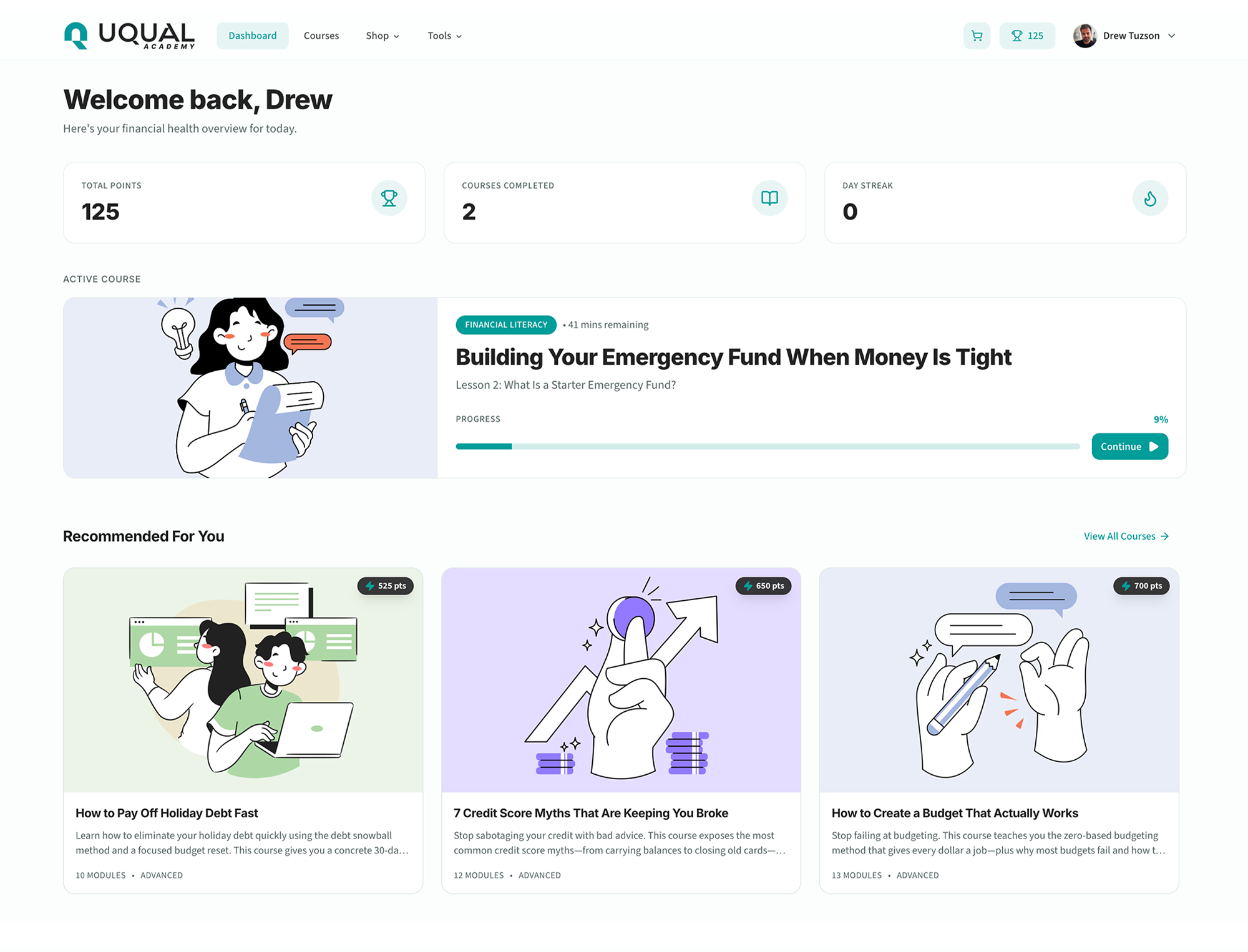
Programs like UQUAL create a personalized roadmap addressing your specific gaps across all four pillars simultaneously. The goal isn't just a better credit score — it's full mortgage qualification.
Loan Readiness vs. Credit Repair: Side-by-Side Comparison
| Factor | Credit Repair | Loan Readiness |
|---|---|---|
| Scope | Credit reports only | Credit, DTI, savings, and documentation |
| Approach | Dispute-based (reactive) | Roadmap-based (proactive) |
| Primary Goal | Remove negative credit items | Full mortgage qualification |
| Timeline | 30–90 days per dispute cycle | 90–180 days for comprehensive preparation |
| Coaching | Limited or none | Personalized ongoing guidance |
| Progress Tracking | Credit score monitoring | Loan Readiness Score across all four pillars |
| DTI Optimization | Not addressed | Active strategies to reduce debt-to-income |
| Savings Plan | Not addressed | Down payment acceleration and closing cost planning |
| Documentation Prep | Not addressed | Full preparation for lender requirements |
| Regulation | Governed by CROA | Financial education and coaching |
| Outcome | Potentially improved credit score | Mortgage-ready borrower |
When Credit Repair Makes Sense
Credit repair is the right fit when your situation matches these criteria:
- Your credit report contains verifiable errors — Incorrect late payments, accounts that don't belong to you, duplicate entries, or collections that should have aged off your report
- Credit is your only barrier to approval — Your DTI is healthy, you have adequate savings, and your documentation is in order. A credit report error is the single thing pulling your score below the lender's minimum threshold
- You need a targeted, isolated fix — You're otherwise mortgage-ready and just need one specific issue resolved before you can qualify
If credit report errors are your only obstacle, you can dispute them yourself for free through the credit bureaus or work with a reputable credit repair company. The Consumer Financial Protection Bureau (CFPB) provides free resources for handling disputes without paying a third party. For broader credit improvement beyond disputes, see our guide to legitimate ways to improve your credit before applying.
When Loan Readiness Makes Sense
Loan readiness is the right approach when any of these apply:
- You've been denied for a mortgage — Denial letters typically cite multiple factors. A structured recovery plan addresses them all, not just credit
- Your DTI is too high — Even a perfect credit score won't overcome a debt-to-income ratio that exceeds lender limits. Loan readiness includes specific strategies to reduce DTI before you apply
- You need to build savings — Down payment and closing costs require planning that credit repair doesn't provide. Loan readiness programs help you create savings acceleration plans and identify assistance programs you may qualify for
- You're a first-time homebuyer — Without experience navigating the mortgage process, comprehensive preparation prevents costly surprises at application time
- You want a measurable timeline — Rather than guessing when you'll be ready, a Loan Readiness Score tracks your progress across all qualification factors and shows you exactly where you stand
- You're not sure what's holding you back — Many borrowers assume credit is the problem when DTI, savings, or documentation gaps are the actual barriers to approval
The Regulatory Distinction
The difference between credit repair and loan readiness isn't just practical — it's also regulatory.
Credit repair companies are subject to the Credit Repair Organizations Act (CROA), enacted in response to widespread consumer fraud in the credit repair industry. CROA imposes specific requirements: companies cannot charge fees before services are fully performed, written contracts with specific disclosures are required, consumers have a three-day right to cancel, and companies cannot make false claims about their ability to improve credit.
Loan readiness programs operate in a different category entirely. They provide financial education, personalized coaching, and comprehensive mortgage preparation — not credit dispute services. UQUAL, for example, helps borrowers understand and improve their complete financial picture through educational content, progress tracking across all four underwriting pillars, and actionable roadmaps. This is fundamentally different from a company that sends dispute letters to credit bureaus on your behalf.
This distinction is important for consumers evaluating their options and for mortgage professionals considering which types of programs to recommend to borrowers who need preparation before they can qualify. For lenders looking to support clients through this process, our guide on how loan officers guide clients through rehabilitation outlines a structured approach.
How Credit Repair and Loan Readiness Work Together
Credit repair and loan readiness are not mutually exclusive. In some situations, borrowers benefit from both:
- Address credit report errors through the dispute process — either on your own or with a credit repair company — while simultaneously working through a loan readiness program
- Use the loan readiness framework to identify whether credit report errors are actually your biggest barrier, or whether DTI, savings, or documentation need attention first
- Prioritize based on impact — Sometimes paying down a $500 credit card balance improves your DTI ratio and your credit utilization simultaneously, creating more progress than any dispute could. Loan readiness helps you see the full picture and focus your effort where it creates the most impact
The key insight: fixing your credit report alone rarely makes you mortgage-ready. The majority of borrowers who are denied for a mortgage have more than one qualification gap. Comprehensive preparation across all four pillars is what moves you from denied to approved.
Five Questions to Help You Decide
Not sure which approach is right for your situation? Work through these questions:
- Have you reviewed your credit reports for errors? If you found inaccuracies, start disputes immediately — you can do this for free while also pursuing loan readiness
- Do you know your debt-to-income ratio? If not, or if it's above 43%, credit repair alone won't get you to approval
- Do you have savings for a down payment and closing costs? If not, you need a savings plan — which loan readiness provides and credit repair does not
- Do you have all the documentation a lender will request? If you're unsure what's needed, loan readiness includes documentation preparation
- Is your credit score your only obstacle? If yes, credit repair may be sufficient. If no — or if you're not sure — loan readiness addresses the complete picture
What to Do Next
For most borrowers working toward homeownership, loan readiness provides the comprehensive preparation that credit repair alone cannot deliver. It's the difference between treating one symptom and building a complete foundation for mortgage approval.
- Learn what loan readiness means — Read our complete guide to loan readiness to understand the four-pillar framework
- See where you stand on credit — Check credit score requirements by loan type to understand your target
- Start building your foundation — Explore UQUAL's free courses covering credit health, DTI optimization, savings strategies, and more
UQUAL Editorial Team
Financial Education Team
The UQUAL Editorial Team creates educational content to help aspiring homeowners become loan-ready through financial literacy, credit building, and mortgage preparation.