Mortgage underwriters calculate qualifying income for self-employed, 1099 independent contractor, and variable-income borrowers by averaging net taxable business income across your last two years of signed federal tax returns, adding back eligible non-cash IRS deductions like depreciation, depletion, and business use of home, and verifying year-to-date cash flow stability before calculating your debt-to-income ratio.
For traditional W-2 salaried employees, mortgage income verification is relatively straightforward: an underwriter multiplies hourly wages or annual base salary into a monthly gross income figure using recent pay stubs and W-2 forms. For the tens of millions of Americans who operate sole proprietorships, work as 1099 independent contractors, own 25% or more of an S-corporation, LLC, or partnership, or earn a significant share of their pay through commission, overtime, bonuses, or tips, mortgage underwriting follows a fundamentally different mathematical playbook.
The single most common shock for self-employed homebuyers happens when they earn strong gross revenue in their business bank account, write off heavy business expenses on their federal tax returns to legally minimize their IRS tax liability, and then discover that a mortgage underwriter only qualifies them on their net taxable profit after deductions (adjusted for specific agency add-backs).
This comprehensive 2026 underwriting guide breaks down the exact rules used by Fannie Mae, Freddie Mac, the Federal Housing Administration (FHA), the Department of Veterans Affairs (VA), and the U.S. Department of Agriculture (USDA) to calculate self-employed, 1099, and variable W-2 income. You will find side-by-side agency comparison tables, a complete line-by-line IRS Form 1040 Schedule C, 1120S, and 1065 K-1 add-back and deduction matrix, rules for 1-year versus 2-year self-employment history, and a step-by-step pre-application preparation plan across all four pillars of loan readiness.
How Mortgage Underwriters Calculate Qualifying Income for Self-Employed and 1099 Borrowers in 2026
Before an underwriter ever opens your tax returns, they apply a universal threshold across every major mortgage program in the United States: the 25% ownership rule.
Under Fannie Mae Selling Guide B3-3.2-01, Freddie Mac Single-Family Seller/Servicer Guide Section 5304.1, and HUD Handbook 4000.1 Section II.A.4.c.x, any individual who holds a 25% or greater ownership interest in a business entity is legally classified as a self-employed borrower for mortgage underwriting purposes. This rule applies regardless of how you pay yourself:
- Sole Proprietors and 1099 Independent Contractors (IRS Form 1040 Schedule C): Freelancers, real estate agents, gig-economy drivers, consultants, construction tradespeople, and single-member LLC owners who report business revenue and expenses on Schedule C of their personal federal tax return.
- Partnerships and Multi-Member LLCs (IRS Form 1065 and Schedule K-1): Partners or LLC members owning 25% or more who receive guaranteed payments and distributive shares of ordinary business income or loss on Schedule K-1 (Form 1065).
- S-Corporations (IRS Form 1120S and Schedule K-1): Shareholders owning 25% or more who typically pay themselves a W-2 officer salary alongside flow-through corporate distributions reported on Schedule K-1 (Form 1120S). Even though you receive a W-2 from your own S-corporation, underwriters do not treat you as a regular W-2 employee; they must evaluate both your W-2 wages and the underlying corporate tax return (Form 1120S).
- C-Corporations (IRS Form 1120): Corporate owners holding 25% or more of the voting stock of a regular C-corporation.
The Core Underwriting Formula: Why Gross Revenue Does Not Equal Qualifying Income
When a self-employed borrower applies for a mortgage, the underwriter cannot divide your gross business receipts (Schedule C Line 1) by 12 months. Instead, the underwriter uses standardized cash-flow analysis tools, specifically Fannie Mae Form 1084 (Cash Flow Analysis) or Freddie Mac Form 91 (Income Analysis Form), to determine Adjusted Net Cash Flow:
- Start with Net Taxable Profit or Loss: Begin with the bottom-line net profit reported to the IRS after operating expenses (for example, Schedule C Line 31, or W-2 officer wages plus Schedule K-1 ordinary income).
- Add Back Non-Cash Paper Deductions: Add back specific accounting deductions that reduced your taxable income on paper without actually draining cash from your bank account during the year (such as depreciation, depletion, amortization, and business use of your home).
- Subtract Mandatory Cash Outflows and Non-Recurring Gains: Subtract non-deductible portion of meals expenses, non-recurring one-time income, and principal/interest payments on short-term business notes or lines of credit rolling over within 12 months.
- Apply the 24-Month (or 12-Month) Trend Test: Compare the most recent tax year against the prior tax year. If adjusted net income increased or stayed stable year-over-year, the underwriter averages all 24 months (Year 1 + Year 2 divided by 24). If adjusted net income declined in the most recent year, the underwriter must use the lower, most recent 12-month figure alone (divided by 12), and if the decline exceeds 20% or shows ongoing instability, the income may be disqualified entirely unless stabilized.
Once your monthly qualifying income is finalized, it becomes the denominator in your front-end and back-end debt-to-income (DTI) ratio.
Side-by-Side 2026 Agency Self-Employed Underwriting Rules Table
While all major agencies share the 25% ownership definition and general two-year averaging framework, there are critical differences in how Fannie Mae, Freddie Mac, FHA, VA, and USDA handle 12-to-24-month self-employment exceptions, declining income, waiving business tax returns, and year-to-date Profit and Loss (P&L) statements.
| Underwriting Rule / Signal | Conventional - Fannie Mae (Selling Guide B3-3.2) |
Conventional - Freddie Mac (Guide Section 5304) |
FHA (HUD Handbook 4000.1 II.A.4.c.x) |
VA Home Loan (VA Pamphlet 26-7 Ch. 4) |
USDA Rural Development (HB-1-3555 Ch. 9) |
|---|---|---|---|---|---|
| Ownership Threshold for Self-Employment | 25% or more ownership in sole proprietorship, partnership, LLC, S-Corp, or C-Corp. | 25% or more ownership interest in any business entity. | 25% or more ownership interest (or 1099 Schedule C earner). | 25% or more ownership interest in a business. | 25% or more ownership interest in a business. |
| Standard Tax Return History Required | 2 Years personal (1040) and business (1065/1120S/1120) federal tax returns. 1 Year often permitted via Desktop Underwriter (DU) if business has existed >= 5 years. | 2 Years personal and business tax returns. 1 Year permitted via Loan Product Advisor (LPA) if business is open >= 5 years with same ownership. | 2 Years personal and business federal tax returns signed and dated, verified via IRS Form 4506-C tax transcripts. | 2 Years personal and business federal tax returns verified via IRS transcripts. | 2 Years full federal personal and business tax returns required. |
| 12-to-24 Month Self-Employment History Exception | Allowed if borrower has >= 12 full months of self-employment reported on a filed tax return AND >= 2 years prior W-2 history in the exact same line of work earning equal or greater income. | Allowed with >= 12 months on tax returns plus documented 2-year prior history in the same occupation or industry at comparable income. | Allowed between 12 and 24 months ONLY if the borrower has 2+ years of previous employment and/or formal education/training in the exact same line of work. | Allowed between 12 and 24 months if the veteran had prior employment in the same occupation/line of work and strong cash reserves or residual income. | Strictly requires 24 consecutive months of self-employment history; 12-to-23 month exceptions rarely granted on GUS. |
| Declining Year-Over-Year Income Rule | If most recent year is lower than prior year, never average upward; use the lower recent year / 12 (if stabilized) and provide written explanation. | Use the most recent 12-month lower income only if the decline has stabilized; steep ongoing decline cannot be used. | If income declined > 20% year-over-year, the loan must be downgraded to Manual Underwriting and requires proof of current stability; always uses lower year. | Uses the lower most recent year if income declined; requires underwriter analysis confirming business viability. | Uses the lower most recent year; significant decline (>10% to 20%) triggers manual GUS review or income exclusion. |
| Year-to-Date Profit & Loss (P&L) & Balance Sheet | Generally not required if tax return was filed recently, unless closing occurs late in the year or pandemic/revenue audit rules apply. | Year-to-date P&L or business bank statements required if more than a calendar quarter has elapsed since last tax period without an extension audit. | Required if more than a calendar quarter (typically after March 31 / April 15) has elapsed since the end of the most recent tax year. CPA-audited P&L required if >1 year since tax filing on extension. | Year-to-date P&L and Balance Sheet required if application is dated more than 3 to 4 months after the close of the last tax year. | Year-to-date P&L required to verify ongoing business stability through the current tax year. |
| Waiving Business Tax Returns (1065 / 1120S / 1120) | Permitted if borrower uses 100% personal funds for down payment/closing costs, has 5 years in the business, and personal return shows increasing income. | Permitted under identical 5-year same-business tenure + 100% personal funds + non-declining personal return rules. | Business returns generally required whenever ownership is >= 25%. | Business returns generally required for >= 25% ownership. | Business returns required for >= 25% ownership. |
Key Strategic Takeaway From the Agency Matrix
If you have been self-employed in your own business for 5 full years or longer with stable or growing income, applying for a Conventional loan through Fannie Mae Desktop Underwriter (DU) or Freddie Mac Loan Product Advisor (LPA) often provides a major advantage: automated underwriting frequently grants a 1-Year Tax Return Waiver. When DU or LPA issues a 1-year tax return finding, the underwriter qualifies your income using only your most recent single year of federal tax returns (divided by 12) instead of averaging in an older, lower tax year from two years ago.
In contrast, FHA, VA, and USDA loans almost always require two full years of federal tax returns, meaning a weaker net profit from two years ago will pull down your 24-month average.

Complete IRS Form 1040 Schedule C, 1120S, and 1065 K-1 Add-Back & Deduction Table
When an underwriter completes Fannie Mae Form 1084 or Freddie Mac Form 91, they do not guess which tax lines to include. Every line item on your tax return is governed by strict mathematical rules.
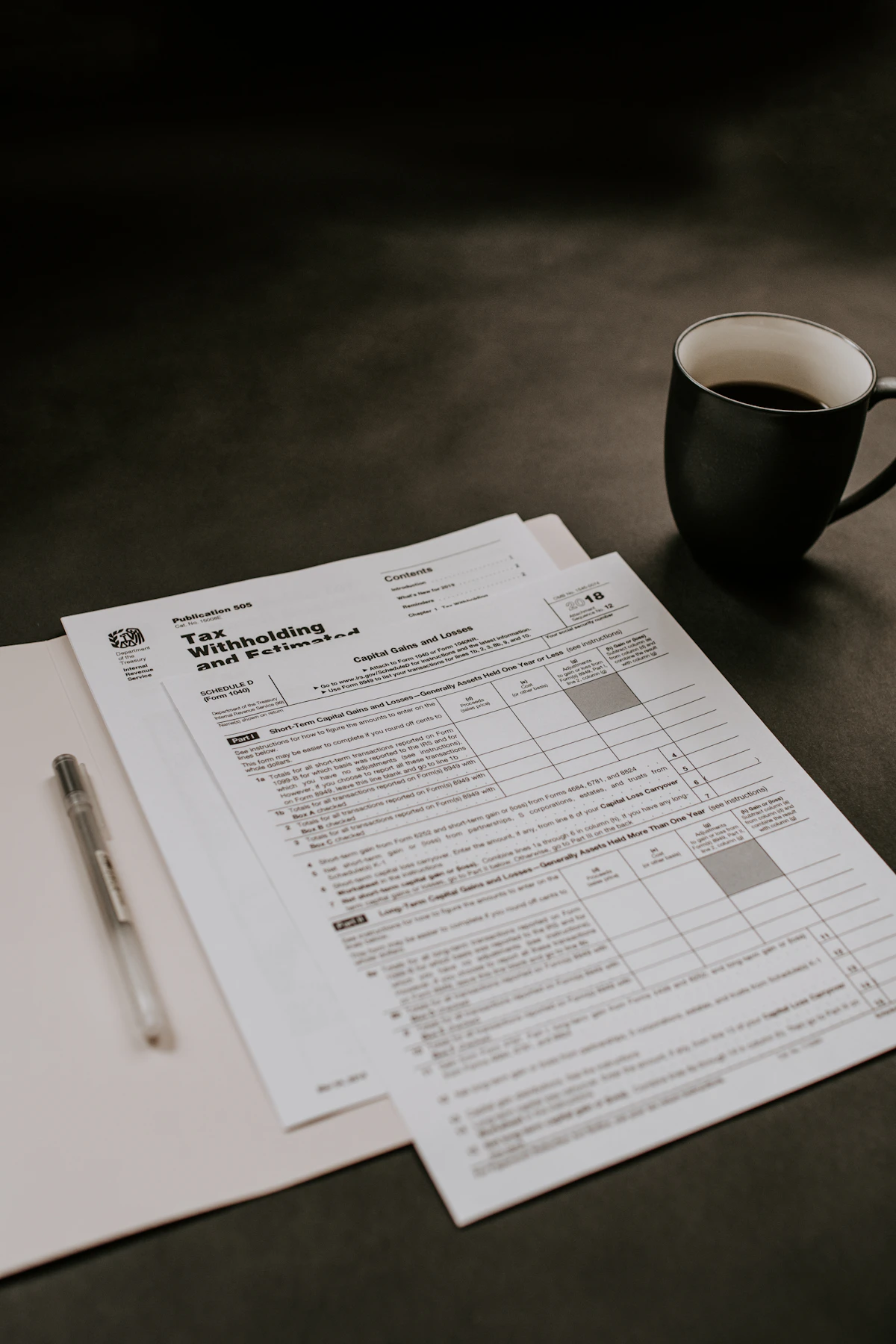
Use the reference matrix below to see exactly which lines on IRS Form 1040 Schedule C (Sole Proprietorship / 1099), IRS Form 1065 / Schedule K-1 (Partnership / Multi-Member LLC), and IRS Form 1120S / Schedule K-1 (S-Corporation) are added back (+) to increase your qualifying mortgage income, and which lines are subtracted (-) from your qualifying income.
| IRS Tax Form & Section | Specific Line Item / Tax Concept | Underwriting Action (+ Add Back vs. - Subtract) |
Exact Underwriting Rule & Reasoning (Fannie Mae Form 1084 / Freddie Mac Form 91 / HUD 4000.1) |
|---|---|---|---|
| Schedule C (Form 1040) Sole Proprietor / 1099 Contractor |
Line 31: Net Profit or (Loss) | Baseline Starting Number | The underwriter starts with your bottom-line net profit (or loss) reported on Line 31 for Year 1 and Year 2, never Line 1 Gross Receipts. |
| Schedule C (Form 1040) | Line 6: Other Income (or Loss) | - Subtract (if non-recurring) |
One-time insurance payouts, forgiven debt, or non-recurring prizes/grants reported on Line 6 are subtracted unless proven recurring. |
| Schedule C (Form 1040) | Line 12: Depletion | + Add Back 100% |
Non-cash accounting deduction for natural resource depletion; added back in full to net cash flow. |
| Schedule C (Form 1040) | Line 13: Depreciation & Section 179 Expense | + Add Back 100% |
Paper depreciation and Section 179 equipment write-offs did not leave your bank account as recurring monthly expense; added back 100%. |
| Schedule C (Form 1040) | Line 24b: Deductible Meals Expense | - Subtract (Non-deductible portion) |
Because the IRS only allows you to deduct 50% of business meals on Line 24b, the other 50% was still spent in cash; underwriters subtract the exclusion amount shown on Schedule C. |
| Schedule C (Form 1040) | Line 30: Expenses for Business Use of Your Home (Form 8829) | + Add Back 100% |
Home office deductions (simplified $5/sq. ft. or Form 8829 allocation of rent/utilities/mortgage interest) are added back 100% because housing costs are already counted in your PITI. |
| Schedule C (Form 1040) | Part V (Line 48): Amortization or Casualty Loss | + Add Back 100% |
Non-cash amortization of startup/intangible costs and one-time casualty losses itemized in Part V (and Form 4562) are added back in full. |
| Schedule C (Form 1040) | Part IV (Line 44a): Business Miles Driven | + Add Back (Depreciation component per mile) |
On Conventional (Fannie/Freddie) and VA loans, underwriters multiply documented business miles (Line 44a) by the IRS annual standard mileage depreciation rate (e.g., $0.28 to $0.33 per mile depending on tax year) and add that dollar amount back to income! |
| Schedule K-1 & Form 1065 Partnership / Multi-Member LLC |
K-1 Line 1, 2, 3: Ordinary Business Income + Net Rental Income K-1 Line 4: Guaranteed Payments to Partner |
Baseline Starting Number | Guaranteed payments (Line 4) are counted 100%. Ordinary income (Lines 1-3) is counted only if the K-1 shows cash distributions were actually made OR the Form 1065 Balance Sheet (Schedule L) passes the Liquidity Test (Current Assets >= Current Liabilities). |
| Form 1065 Partnership Return (Multiplied by Ownership %) |
Lines 16a/16c: Depreciation Line 17: Depletion Form 4562: Amortization |
+ Add Back (Pro-rata by Ownership %) |
Non-cash depreciation, depletion, and amortization on the partnership return are multiplied by your Schedule K-1 ownership percentage and added back. |
| Form 1065 Partnership Return (Multiplied by Ownership %) |
Schedule L Line 16d: Mortgages, Notes, Bonds Payable in Less Than 1 Year | - Subtract (Pro-rata by Ownership %) |
Short-term business notes due within 12 months are subtracted from business cash flow UNLESS the CPA or loan file documents that the credit line routinely rolls over every year. |
| Form 1065 Partnership Return (Multiplied by Ownership %) |
Schedule M-1 Line 4b: Travel & Entertainment / Non-deductible Meals | - Subtract (Pro-rata by Ownership %) |
Disallowed meals and entertainment cash expenses are multiplied by your ownership share and subtracted from qualifying income. |
| Schedule K-1 & Form 1120S S-Corporation (>=25% Owner) |
W-2 Box 1/5: Officer Compensation K-1 Lines 1, 2, 3: Ordinary Corporate Income |
Baseline Starting Number | Combines your personal W-2 wages from the S-Corp with your share of K-1 ordinary profit/loss (subject to K-1 distribution or Schedule L liquidity verification). |
| Form 1120S S-Corporation Return (Multiplied by Ownership %) |
Line 14: Depreciation Line 15: Depletion Form 4562: Amortization |
+ Add Back (Pro-rata by Ownership %) |
Corporate depreciation, depletion, and amortization are multiplied by your S-Corp ownership percentage and added back to qualifying cash flow. |
| Form 1120S S-Corporation Return (Multiplied by Ownership %) |
Schedule L Line 17d: Notes/Mortgages Payable in < 1 Year Schedule M-1 Line 3b: Non-deductible Meals |
- Subtract (Pro-rata by Ownership %) |
Short-term corporate debt payable in under 12 months (unless documented as rolling over) and non-deductible meals are subtracted by ownership percentage. |
Worked Example: How Schedule C Add-Backs Rescue a 1099 Borrower's DTI
Suppose an independent trucking contractor or real estate consultant grossed $165,000 on Schedule C in both 2024 and 2025, but after business write-offs reported only $48,000 per year ($4,000/month) in Net Profit on Schedule C Line 31. At $4,000/month qualifying income, a $2,100/month mortgage payment plus $450/month in consumer debt creates a 63.8% back-end DTI, resulting in an immediate denial.
However, when the underwriter completes Fannie Mae Form 1084 using the borrower's complete Schedule C:
- Line 31 Net Profit:
$48,000 / year - Add Back Line 13 Depreciation (Vehicle/Equipment):
+$14,400 / year - Add Back Line 30 Business Use of Home:
+$1,500 / year - Add Back Line 44a Business Mileage Depreciation (
25,000 miles x $0.30/mile):+$7,500 / year - Subtract Line 24b Meals Exclusion:
-$600 / year - Total Adjusted Qualifying Income:
$70,800 / year=$5,900 / month(+47.5% higher qualifying income!)
At $5,900/month in verified qualifying income, that exact same $2,100 PITI payment and $450 consumer debt drops from a 63.8% DTI down to a 43.2% back-end DTI, moving the file directly into the Conventional and FHA approval zone. You can model your own income and debt numbers right now on our Interactive Mortgage DTI & Debt Tradeoff Calculator.
The K-1 Distribution & Business Liquidity Rule (Schedule L Test)
If you own 25% or more of an S-Corporation (Form 1120S) or Partnership / LLC (Form 1065), there is a critical second hurdle added by Fannie Mae (B3-3.2-02) and Freddie Mac (Section 5304.1) that catches many business owners off guard: proving that K-1 ordinary profit was either distributed to you or that the business is liquid enough to support the withdrawal.
When your Schedule K-1 shows positive Ordinary Business Income on Line 1 (above and beyond your W-2 officer salary or Line 4 guaranteed payments), the underwriter checks Schedule K-1 Line 16d (on Form 1120S) or Line 19a (on Form 1065) to see whether the business actually distributed that cash to you:
- Path 1 (Cash Distributions Match or Exceed K-1 Income): If the K-1 confirms that cash distributions paid to you equaled or exceeded the K-1 ordinary income being used to qualify, the income is immediately eligible (assuming the business has positive net worth and stable revenue).
- Path 2 (Undistributed K-1 Income Requires the Schedule L Liquidity Ratio Test): If the company kept the profits inside the business bank account rather than distributing them on K-1 Line 16d/19a, the underwriter can only count that K-1 income if the corporate balance sheet (Schedule L of Form 1120S or Form 1065) proves the business is solvent using the Quick / Current Ratio Test:
- Current Ratio Formula:
(Schedule L Current Cash + Accounts Receivable + Inventory) / (Schedule L Current Liabilities Payable in < 1 Year)must be 1.00 or greater. - If your accountant checked the box on Form 1120S/1065 waiving Schedule L (allowed by the IRS for smaller businesses with receipts and assets under $250,000), and you had undistributed K-1 income, the underwriter will request an internally prepared or CPA-prepared year-end Balance Sheet to verify a >= 1.00 liquidity ratio.
- Current Ratio Formula:
How to Exclude Business Debt From Your Personal Credit Report (Paid by the Business)
Many self-employed borrowers personally guarantee auto loans for work trucks, equipment leases, or business credit cards that consequently show up on their personal Equifax, Experian, and TransUnion credit reports.
Under Fannie Mae Selling Guide B3-6-05 (Court-Ordered Assignment of Debt / Debts Paid by a Business) and HUD Handbook 4000.1 II.A.4.b.iv(P), an underwriter can completely exclude a business debt from your personal DTI ratio if you provide two proofs:
- 12 Consecutive Months of Cancelled Business Checks or Business Bank Statements: Showing that the debt was paid every single month directly out of the business checking account (never your personal checking account) with zero 30-day late payments over the past 12 months.
- Tax Return Expense Verification: Your business tax return (Schedule C, Form 1065, or Form 1120S) shows that the interest or lease expense for that obligation is already deducted as a business operating expense on the tax return (preventing "double counting" against both your business net income and your personal DTI).
Variable W-2 Income Rules: Commission, Overtime, Bonus, Tips, and Second Jobs
You do not have to own a business or file a 1099 to face variable-income underwriting scrutiny. If you are a W-2 employee whose compensation includes overtime, performance bonuses, sales commissions, tipped income, shift differentials, RSU stock vesting, or a second part-time job, underwriters apply strict continuity rules before adding those dollars to your base salary.
| Variable W-2 Income Type | Standard History Benchmark | When Is a 12-to-24 Month History Accepted? | How Underwriters Calculate the Monthly Qualifying Amount | What Triggers Disqualification of Variable Income? |
|---|---|---|---|---|
| Overtime & Shift Differential Pay | 24 Months (2 years W-2s / VOE + current 30-day pay stub) | 12 to 24 Months accepted across Conventional, FHA, and VA if received consistently with the same employer and employer does not indicate overtime will end. | (Year 1 Overtime + Year 2 Overtime + YTD Overtime) / Total Months (or YTD/most recent year if declining). |
Year-to-date pay stub shows overtime has dropped sharply compared to prior 2 years, or employer VOE states overtime is "unlikely to continue." |
| Annual / Quarterly Bonus Pay | 24 Months (2 consecutive years of receipt documented on VOE/pay stubs) | 12 to 24 Months accepted on DU/LPA if paid consistently and supported by employer verification. | Averaged over 24 months (or 12-to-24 months). If the most recent annual bonus was smaller than the prior year, only the lower recent bonus is divided by 12. | One-time sign-on bonus, retention bonus, or declining bonus trend without stabilization. |
| Commission Income | 24 Months (2 years W-2s + VOE break-out) | 12 to 24 Months permitted across Fannie Mae, Freddie Mac, and FHA when there are positive compensating factors and stable earnings trend. | 24-month average (or 12-month lower figure if commission declined). Under recent agency updates, unreimbursed employee business expenses are no longer deducted for W-2 commission earners. | Commission switched from salary + base to 100% commission within the last 6 to 12 months without a full 12-month commission track record. |
| Tip Income (Hospitality, Service, Healthcare) | 24 Months (or 12-24 months with same occupation history) | 12 to 24 Months accepted if tips are reported on W-2s, pay stubs, or IRS Form 4137 / Form 1040. | Only tax-reported tips shown on W-2s, pay stubs, and federal tax returns can be used. Unreported cash tips deposited into a bank account cannot be used as qualifying income. | Cash tips that were never reported on pay stubs or federal income tax returns. |
| Part-Time / Secondary Job ("Moonlighting" or 2nd W-2) | 24 Uninterrupted Months working both jobs simultaneously | Rarely waived on FHA/VA/USDA; Conventional DU/LPA may consider >= 12 months uninterrupted simultaneous employment with strong reserves/credit. | 24-month average of the second job's earnings, provided the borrower has worked both the primary job and the second job concurrently for two years. | Taking on a second job (or Uber/DoorDash side hustle) only 3 to 9 months before applying to boost DTI; excluded until 12 to 24 months of concurrent history is established. |
| W-2 to 1099 Transition (Same Employer or Industry) | 12 to 24 Months of filed tax returns | Critical Trap: Switching from a W-2 employee to a 1099 independent contractor (even doing the exact same job at the same company) reclassifies you as self-employed immediately. | Once you switch to 1099, underwriters cannot use your current 1099 pay stubs until you have at least 12 to 24 months of filed Schedule C tax returns (unless an FHA/Conventional 1-year exception with filed return is met). | Switching from W-2 to 1099 within 1 to 11 months before applying for a mortgage before filing a full-year Schedule C tax return. |
The #1 Career Mistake Before Buying a Home: Switching From W-2 to 1099 Within 12 Months of Application
Every month, highly qualified nurses, IT engineers, sales executives, and construction managers are denied for a mortgage right before closing because they accepted a "raise" to switch from a W-2 employee to a 1099 independent contractor (or started their own LLC) three to nine months before applying for a home loan.
Under Fannie Mae B3-3.2-01 and HUD Handbook 4000.1, the moment your pay structure changes from W-2 wages (where taxes are withheld by an employer) to 1099 contract revenue, you are legally operating a new business with unverified operating expenses. Until you have completed at least 12 full months of self-employment and filed a federal tax return (Schedule C) proving your net profit after business expenses, an underwriter cannot count a single dollar of your 1099 revenue.
Readiness Rule: If you plan to buy a home within the next 12 months, do not switch from W-2 employment to 1099 independent contracting or 100% commission until after your mortgage has closed and funded.
What If You Do Not Qualify on Tax Returns? Agency Underwriting vs. Non-QM Bank Statement Loans
Sometimes a thriving business owner legitimately reinvests heavily into new equipment, inventory, or rapid expansion, leaving very little net taxable income on their last two years of IRS Form 1040 returns. When that happens, borrowers have two distinct paths to evaluate:
Path A: Optimizing for a Standard Agency Loan (FHA, Conventional, VA, or USDA)
Standard agency loans offer the lowest interest rates and lowest down payment minimums (0% VA/USDA, 3% to 5% Conventional, 3.5% FHA). To qualify for an agency loan as a self-employed borrower:
- Wait to File Your Next Tax Return Strategically (With Your CPA): If you are applying in January, February, or March after a much stronger revenue year, filing your new federal tax return early (and having the IRS process your transcript) allows the underwriter to use the new higher tax year and drop the oldest tax year from two years ago.
- Capture Every Legitimate Add-Back on Form 1084 / Form 91: Ensure your loan officer documents 100% of depreciation, depletion, amortization, business use of home, Schedule C business mileage depreciation, and business-paid credit report debts.
- Use the 5-Year Business 1-Year Tax Return Waiver on DU/LPA: If your most recent tax year is strong and your business is at least 5 years old, ask your lender to run both Fannie Mae DU and Freddie Mac LPA to trigger a 1-year tax return requirement.
Path B: Non-QM 12-to-24 Month Bank Statement Loans (Portfolio Alternative)
If your tax returns show a net loss or excessive write-offs that cannot be overcome with add-backs, specialty portfolio lenders offer Non-Qualified Mortgage (Non-QM) Bank Statement Loans. Instead of reviewing your IRS Form 1040 tax returns, a Non-QM underwriter reviews 12 or 24 consecutive months of business (or personal) bank statements, totals your recurring monthly business deposits, and applies a standardized expense factor (often 50% for service businesses, or a lower CPA-certified expense ratio) to calculate qualifying income.
Tradeoffs to Understand Before Choosing Non-QM:
- Higher Down Payment Requirements: Typically requires 10% to 20%+ down payment (compared to 3% to 3.5% on agency loans).
- Higher Interest Rates & Reserves: Interest rates are generally 1.00% to 2.25% higher than conforming or FHA rates, and lenders usually require 6 to 12 months of liquid PITI cash reserves (verified under strict bank statement seasoning rules).
- Refinance Exit Strategy: Many self-employed buyers who use a Non-QM loan plan with their CPA to report two clean years of taxable income so they can refinance into a lower-rate Conventional or FHA mortgage 12 to 24 months later.
90-Day Loan Readiness Action Plan for Self-Employed, 1099, and Variable-Income Borrowers
Preparing a self-employed or variable-income file requires coordinating all four pillars of the UQUAL 4-Pillar Loan Readiness Framework before a lender ever pulls your credit report:
Step 1 (Days 1 to 20): Run a Pre-Underwriting Cash-Flow Audit (Form 1084 / Form 91)
- Gather your last 2 years of signed personal federal tax returns (IRS Form 1040 with all schedules) and, if you own 25% or more of an LLC, partnership, or corporation, your last 2 years of business tax returns (Forms 1065, 1120S, or 1120) and K-1s.
- Calculate your 24-month average adjusted net income using the add-back table above (or our Interactive Mortgage DTI Calculator) and verify that your most recent year did not decline by more than 20%.
- Confirm with the IRS (
IRS.gov) that your returns have been fully processed and that you have zero unpaid federal tax balances (or have a written IRS installment agreement with at least 3 consecutive on-time payments made, as explained in our collections, charge-offs, and tax lien underwriting guide).
Step 2 (Days 21 to 50): Separate Business and Personal Accounts & Document Business-Paid Debts
- Stop commingling funds immediately: Never pay personal expenses directly from your business bank account, and never use your business checking account for your personal mortgage earnest money or down payment unless your CPA provides a written letter confirming the withdrawal will not negatively impact business operations (an FHA/Conventional requirement).
- Transfer down payment and PITI reserve cash into your personal savings account at least 60+ days before applying so that the funds are 100% seasoned across two complete personal monthly bank statements. Read our complete guide to sourced and seasoned funds and mortgage bank statement rules.
- Assemble 12 consecutive months of cancelled business checks or business bank statements for any auto loan, equipment loan, or credit card appearing on your personal credit report that is paid by your business.
Step 3 (Days 51 to 75): Optimize Credit Utilization, Student Loans & Year-to-Date P&L
- Pay down personal revolving credit card balances below 10% utilization three to five days before your monthly statement closing dates to maximize your middle mortgage FICO score (see our 500 to 620 low-credit mortgage readiness roadmap).
- If you have federal student loans, verify your documented monthly payment or Income-Driven Repayment (IDR) letter using our Student Loan Payment Readiness Guide.
- Prepare an accurate Year-to-Date Profit and Loss (P&L) Statement and Balance Sheet signed by you (or your CPA), supported by your last 2 to 3 months of business bank statements showing consistent ongoing revenue.
Step 4 (Days 76 to 90): Verify Business License / Active Status & Match With the Right Program
- Underwriters must independently verify that your business is currently active and operating within 10 to 30 days prior to loan closing. Ensure your Secretary of State registration is in "Good Standing," your professional/contractor license is active, or obtain a signed CPA letter confirming they have prepared your business tax returns for the past 2+ years and that your business remains active.
- Run your complete numbers through the 4-Pillar Mortgage Readiness Score Calculator before authorizing a formal lender credit pull.
Compliance, Consumer Rights & Free Official Resources
UQUAL is a loan readiness company. UQUAL is not a credit repair company and does not provide credit repair, debt settlement, legal, or tax guidance, and UQUAL is not a lender.
We believe every self-employed, 1099, and variable-income homebuyer deserves transparent access to the exact federal agency rules that govern their mortgage application:
- Consult a Licensed CPA or Enrolled Agent Before Filing Taxes: UQUAL does not provide tax preparation or accounting advice. Always review tax deductions, entity elections (Sole Proprietorship vs. S-Corp), and IRS filings with a qualified Certified Public Accountant (CPA) or tax professional.
- Free Official Credit Reports (FCRA Rights): Pull your official Equifax, Experian, and TransUnion credit reports for free at AnnualCreditReport.com to see which business or personal tradelines report on your personal credit file.
- Free HUD-Approved Housing Counseling: Connect with a HUD-approved housing counselor at no or low cost through the Consumer Financial Protection Bureau's official directory at https://www.consumerfinance.gov/find-a-housing-counselor/.
Ready to see how your adjusted self-employed or variable income lines up against 2026 mortgage DTI limits? Test your exact numbers in our Interactive Mortgage DTI & Debt Tradeoff Calculator or calculate your overall readiness on the Mortgage Readiness Hub.

Brian Eck
VP of Sales and Marketing
Brian Eck leads sales and marketing at UQUAL. He works directly with mortgage professionals to help connect not-yet-qualified and declined borrowers with a loan-readiness path.
Topics
Interactive Diagnostic Tools
Test Your Numbers Against 2026 Agency Underwriting Rules
Use UQUAL's free calculators and underwriting hubs to evaluate your 4-pillar readiness score, Front-End and Back-End DTI ratios, and student loan IDR documentation before authorizing a hard credit pull.
4-Pillar Mortgage Readiness Score Calculator
Grade your Credit, DTI, Down Payment & Reserves, and Documentation readiness on a 0 to 100 scale.
Interactive Mortgage DTI & Debt Tradeoff Calculator
Compare your PITI and total DTI against FHA, Conventional, VA, and USDA rules and simulate paying off debt vs. saving cash.
Student Loan IDR & Mortgage DTI Hub
See how Fannie Mae, Freddie Mac, FHA (0.5% rule), and VA (5% / 12 rule) treat $0 IDR student loan payments.
Request a mortgage readiness review
UQUAL can review your readiness signals and help identify a practical next step before you apply.
2026 Underwriting Reference Mesh
Core Loan Readiness Hubs & Flagship Underwriting Guides
Explore UQUAL's canonical pillar hubs and agency rulebook guides covering credit tiers, manual underwriting, collections, waiting periods, self-employed income, and bank statement seasoning.